Smokies Anniversary: Enjoy Historic Images of the Park
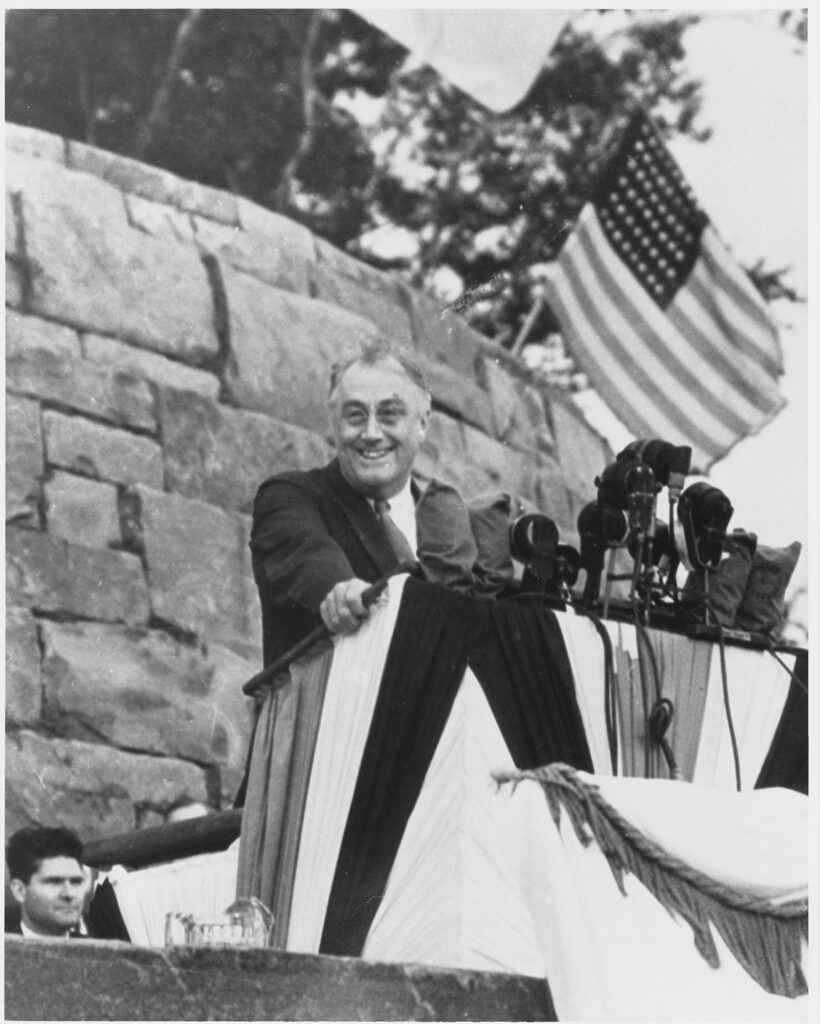
On September 2, 1940, President Franklin D. Roosevelt officially dedicated the Great Smoky Mountains National Park. He spoke to a crowd of thousands assembled at Newfound Gap, at the state line between Tennessee and North Carolina.
Celebrate by visiting the UT Libraries’ online digital collections for some stunning photographs of the Smokies over the decades. The fourteen collections that comprise the Great Smoky Mountains Regional Collection include scrapbooks, journals, and thousands of photos, some taken as early as 1886.
____________
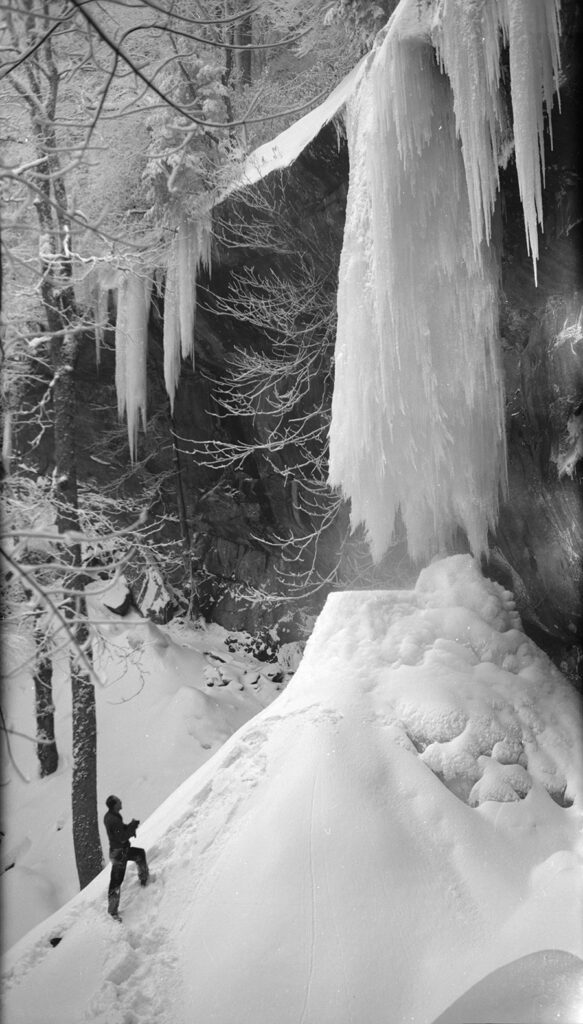
Albert “Dutch” Roth, born in 1890 in Knoxville, Tennessee, is recognized as one of the most prolific early photographers of the Great Smoky Mountains’ Greenbrier and Mount Le Conte sections. What began in 1913 as a diversion soon developed into a serious avocation as Roth perfected his penchant for photography while pursuing an enthusiasm for hiking the unexplored regions of the mountains.
____________
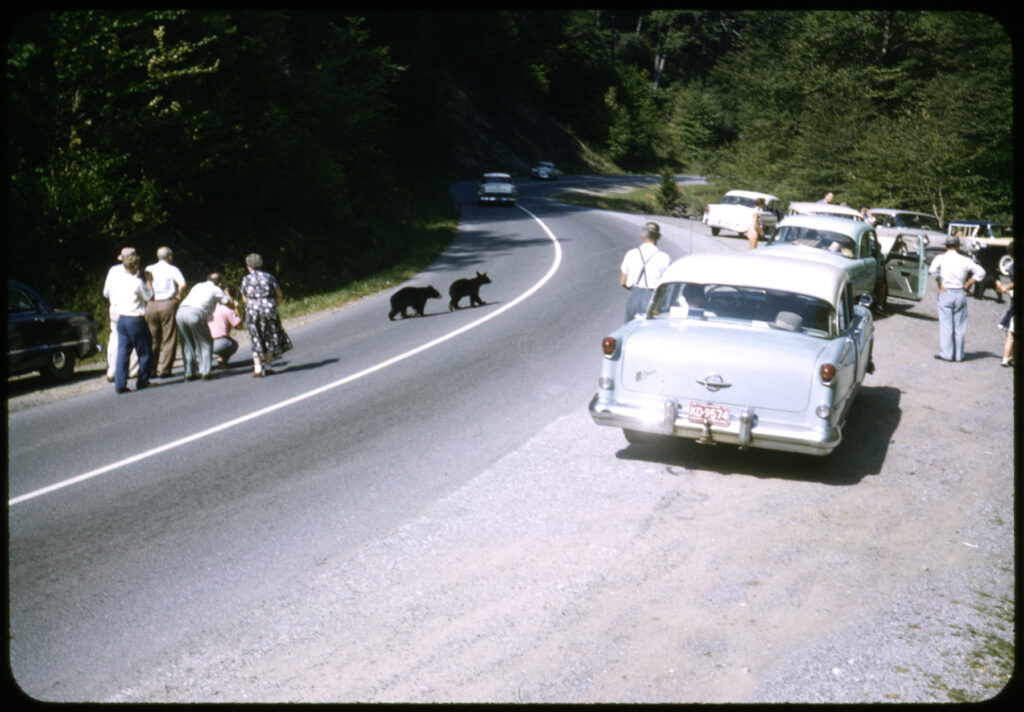
The William Derris Slide Collection documents seasonal landscapes, flora, wildlife, and the mountain people in the Great Smoky Mountains between 1940 and 1960.
____________

When the late Dr. Elgin P. Kintner took his photographs of the Smokies in the 1960s and ‘70s, he would create a panorama by taking a sequence of individual photos and arranging them in order. The UT Libraries scanned those individual images and “stitched” them together electronically to create seamless panoramas.
Kintner hiked all the Smokies trails at least once and most he hiked many times. His favorite locations for taking his panoramic images were from the vantage point of the fire towers in the Park. Many of the images were taken in winter when the drift of snow and the treeless landscape best displayed the topography of the mountains. The UT Libraries has enhanced many of those panoramic views by labeling the mountain peaks.
____________
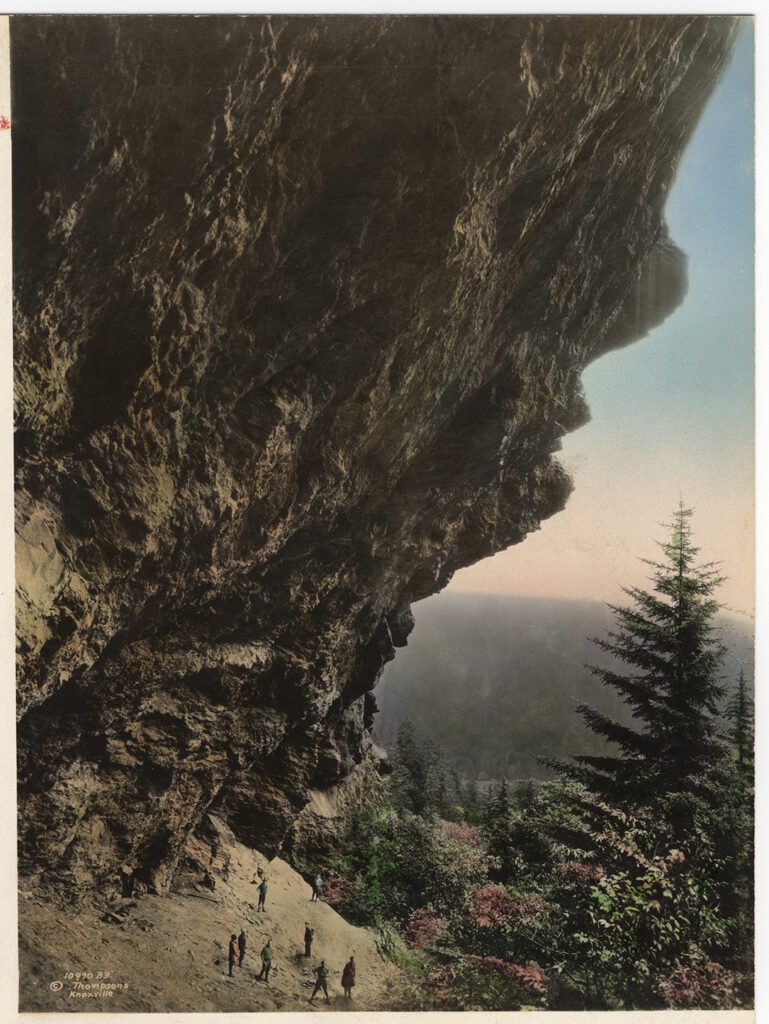
Jim Thompson and his brother Robin were the preeminent Knoxville professional photographers of the early and mid-twentieth century. Jim Thompson’s photographs appeared in countless publications in the 1920s and 1930s, and were invaluable in selling the idea of a new national park in the Great Smoky Mountains.
____________
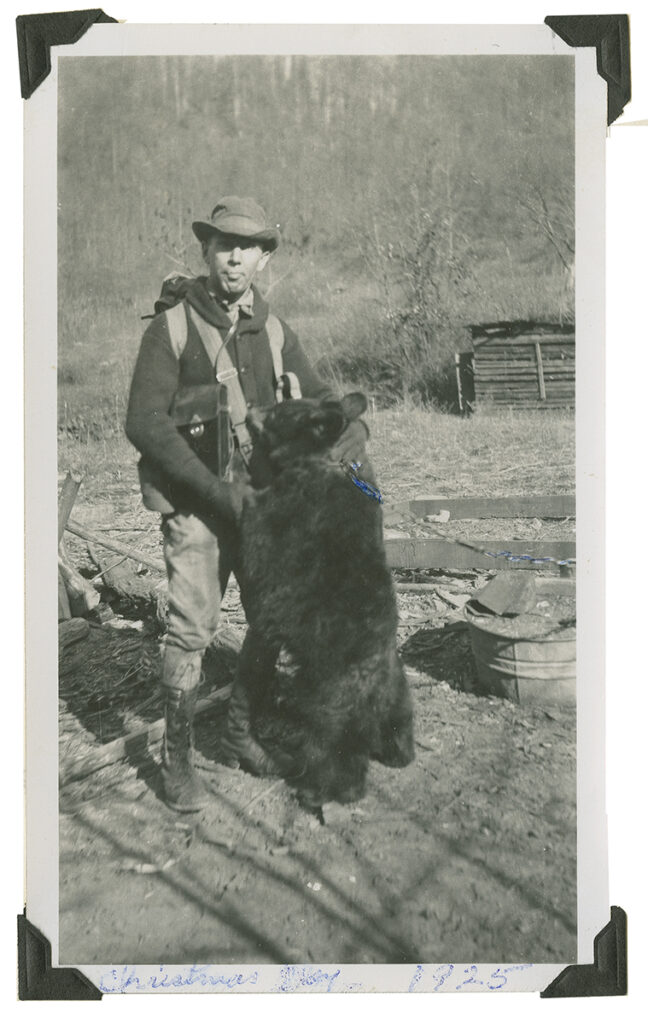
In the late 1950s, Albert “Dutch” Roth compiled a journal he called “Tales from the Woods,” documenting his many years hiking with the Smoky Mountains Hiking Club, an organization that he helped found in 1924.
____________
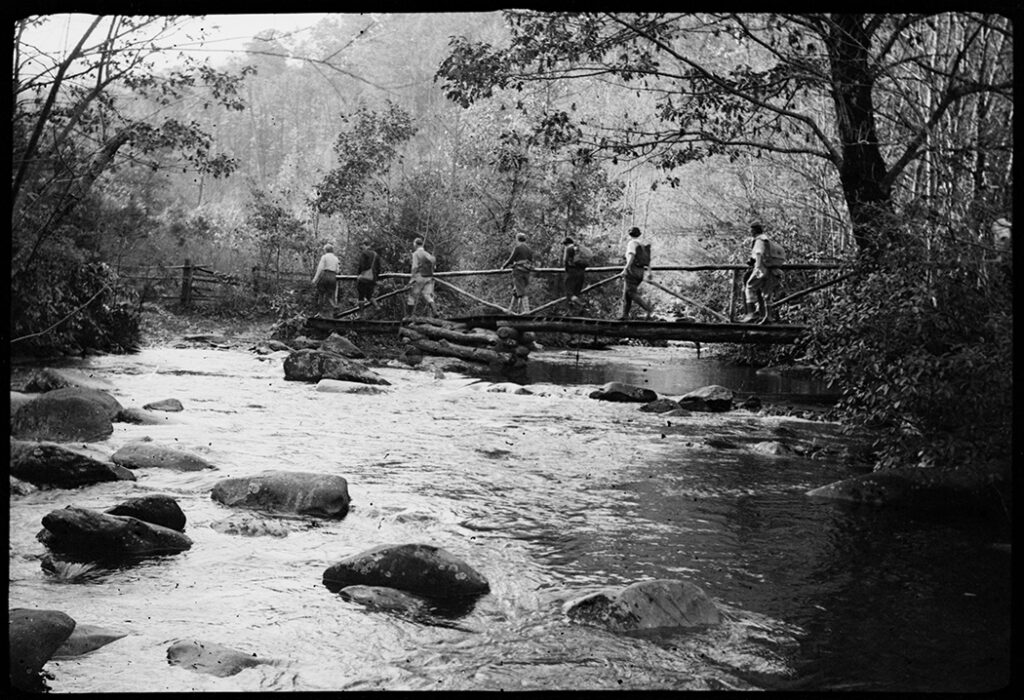
Herbert Webster began chronicling his adventures in the Great Smoky Mountains at age 16 when he attended a Rotary Club camp for underprivileged boys in Gatlinburg. The Herbert M. Webster Photograph Collection includes 500 images of his mountain excursions in the 1930s.
____________
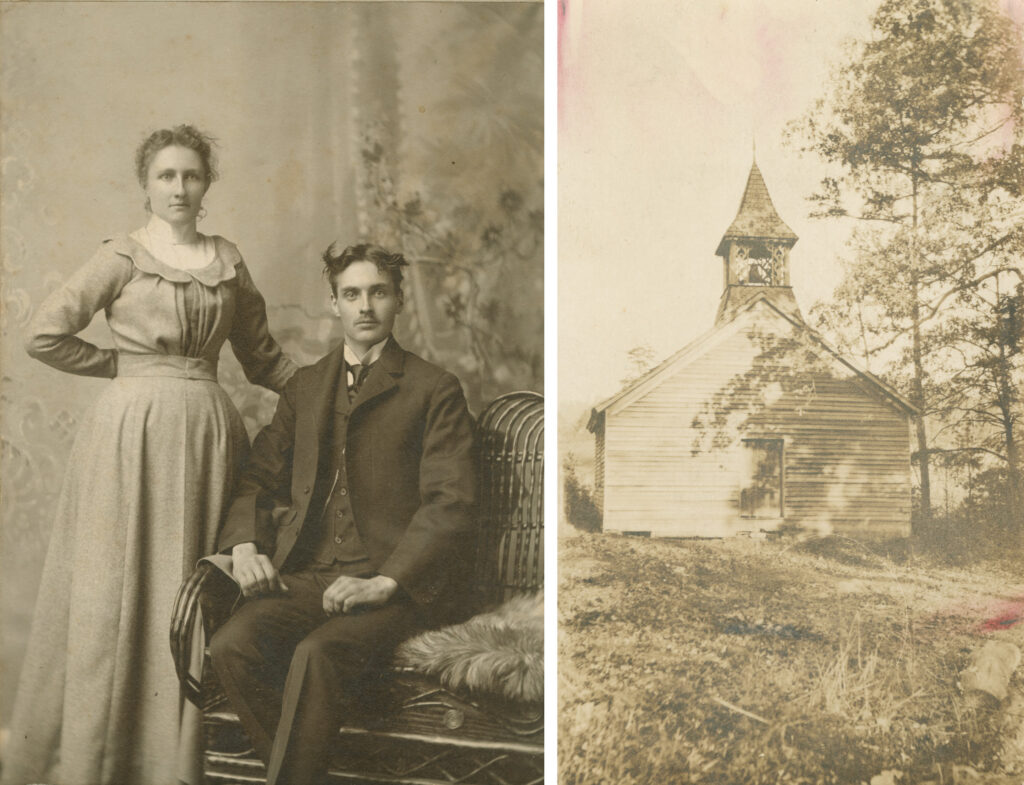
Fifty Years in Cades Cove is a collection of three handwritten memoirs by John W. Oliver (1878–1966) that afford glimpses into the lives of the mountain people of Cades Cove, a small community on the Tennessee side of the Great Smoky Mountains.
____________
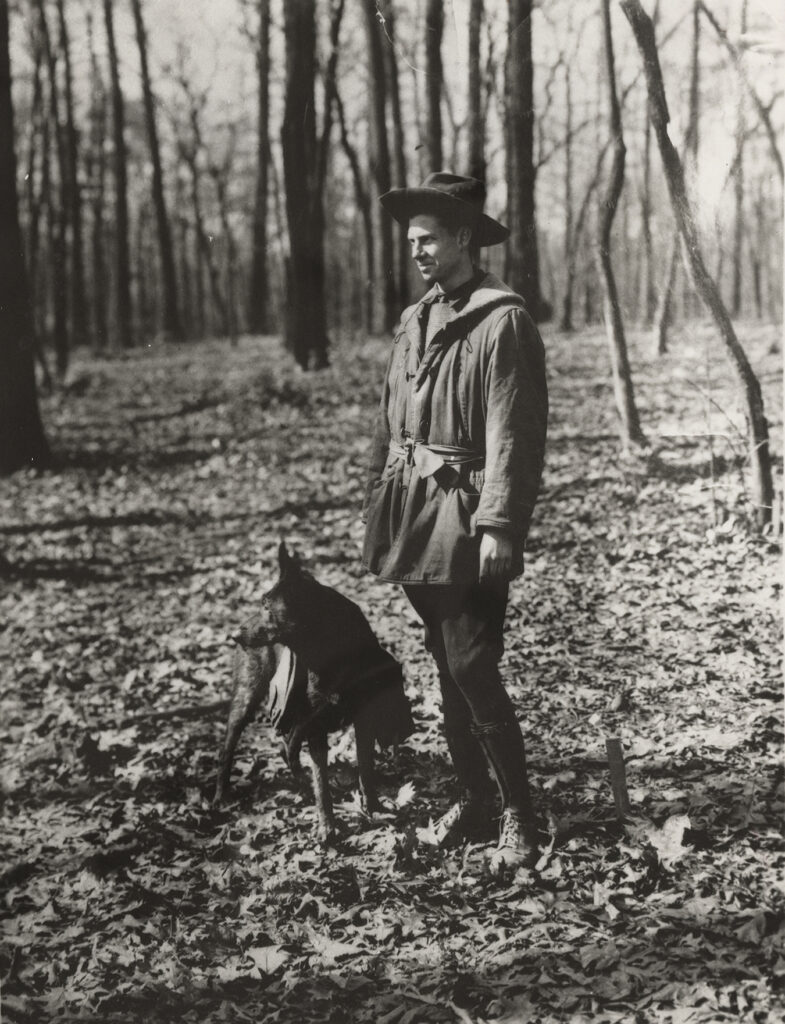
Paul Adams established the first permanent camp on Mount Le Conte and served as custodian and guide to hikers visiting the Smokies’ iconic peak. His constant companion was Smoky Jack, a large German shepherd Adams trained to be a pack dog. Smoky Jack not only carried supplies but would actually make the four-hour trip alone from the top of Le Conte to Charlie Ogle’s store in Gatlinburg and back again.
____________
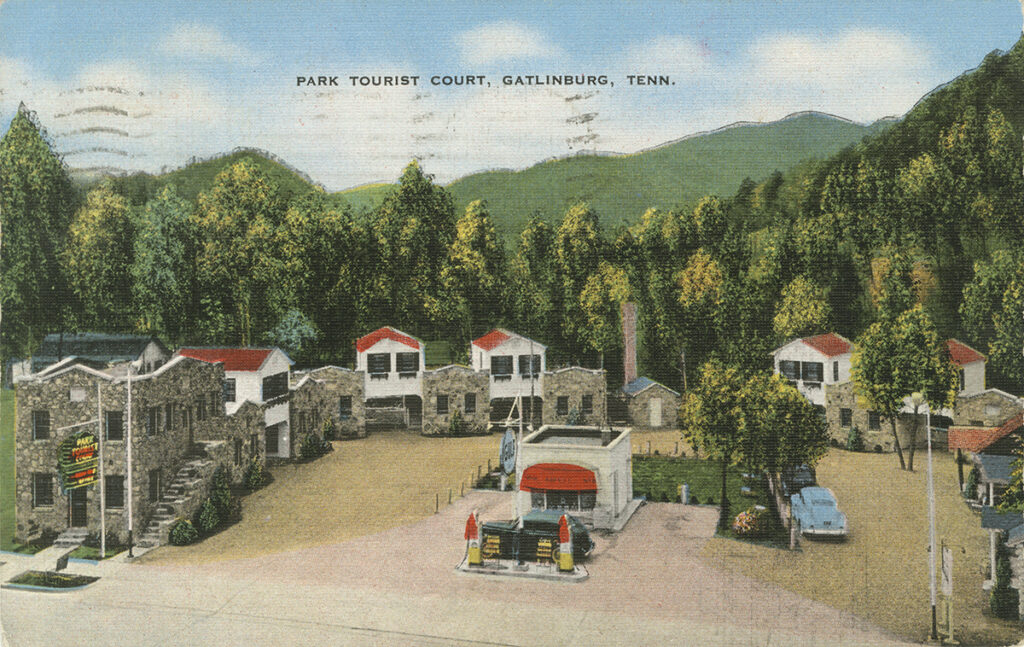
Postcards from the Great Smoky Mountains is a collection of over 1,400 picture postcards from the early- to the mid-20thcentury. Postcards depict the burgeoning hotel industry in Gatlinburg, the growing importance of the craft industry to the region, the often stereotypical depictions of the Cherokee, the enduring mountain landscape, and bears, the iconic animal of the Smokies.
____________
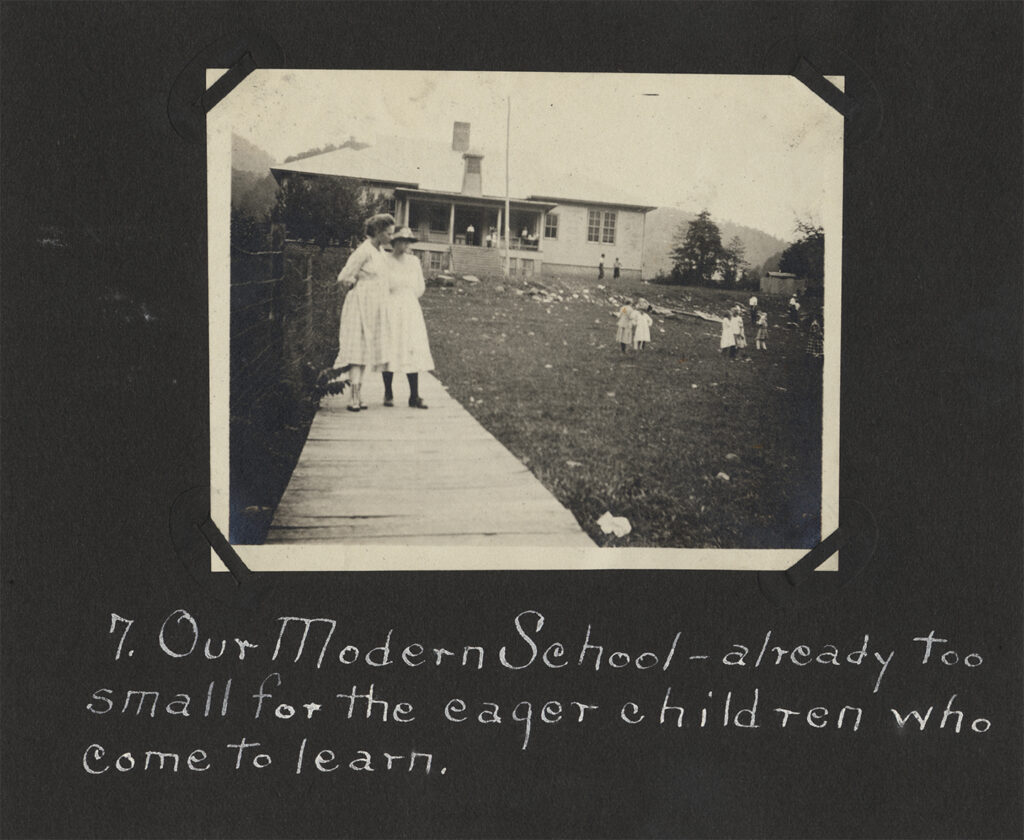
In 1912, the Pi Beta Phi Fraternity for Women established, first, a settlement school and then the Arrowcraft shop to sell local crafts in Gatlinburg, Tennessee — at the time, a tiny mountain hamlet. In the online collection From Pi Beta Phi to Arrowmont, you can browse through scrapbooks and photos of the mountain community long before it became a popular tourist destination.
____________
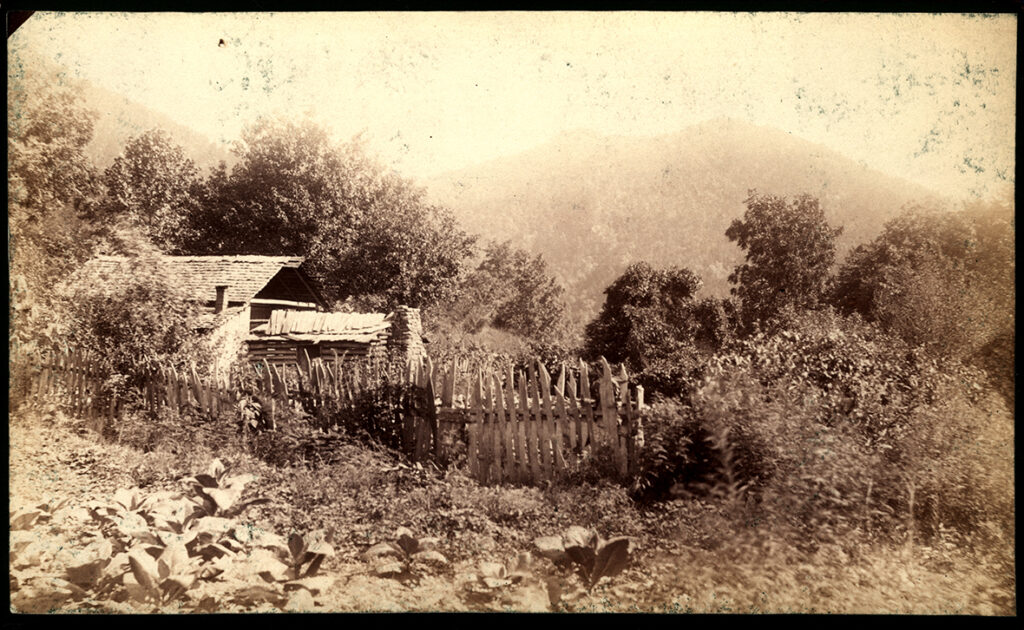
During an August 1886 trip to East Tennessee, William Cox Cochran, a Cincinnati lawyer and amateur photographer, took 118 pictures of people and landmarks, mostly located in what is now the Great Smoky Mountains National Park.
____________
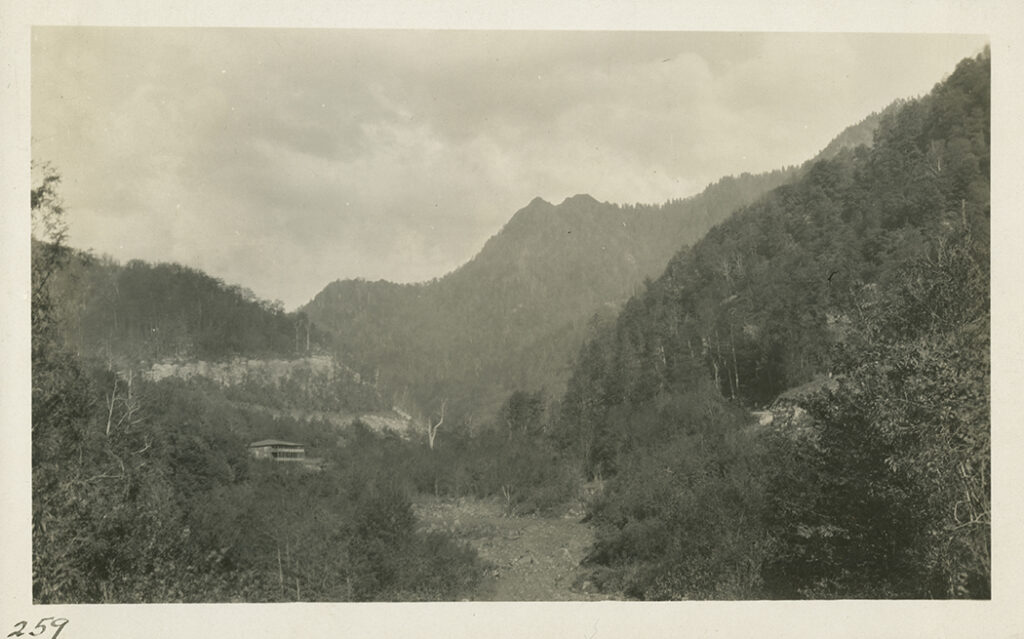
The Smoky Mountains Hiking Club, founded in 1924, predates the Park itself and is still very active today. The club was formed for the express purpose of sponsoring trips into the Smokies to build support for establishing a national park. The Smoky Mountains Hiking Club Collection includes annual handbooks that document the hikes and other activities of the club.
____________
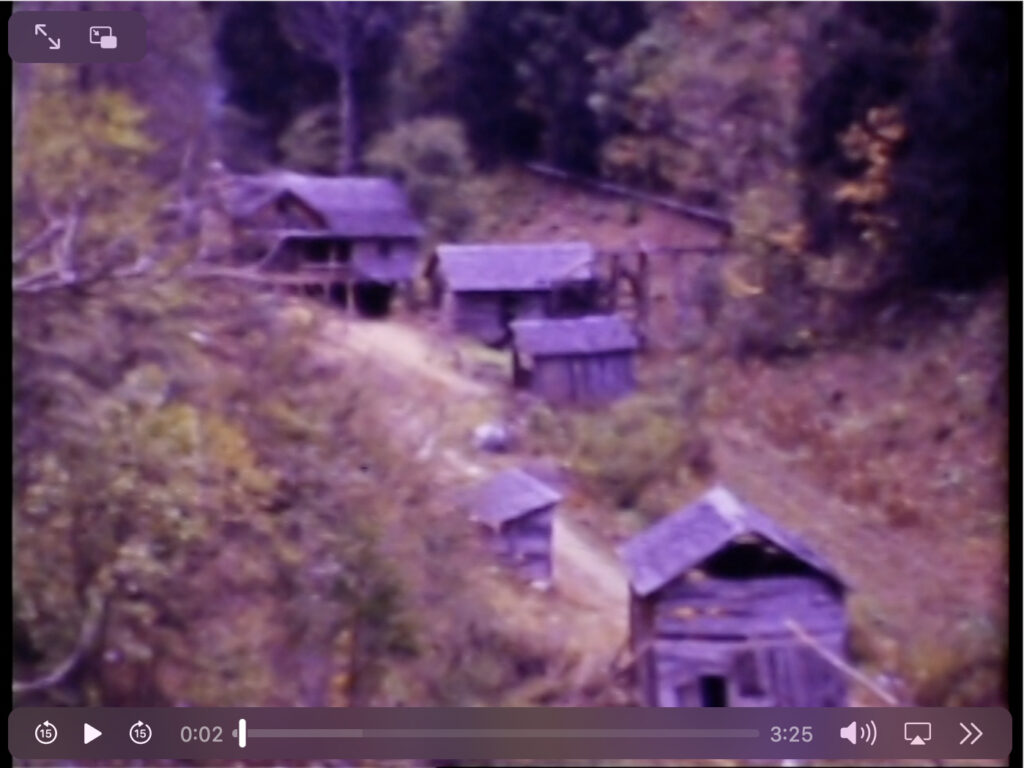
A series of home movies recorded by William Derris, owner of the Derris Motel in Townsend, Tennessee, in the 1940s form the William Derris Film Collection. Under the guidance of our music librarian, local musicians recorded traditional Smoky Mountain tunes to accompany the silent films. Watch and listen to a selection we aptly dubbed “On Top of Old Smoky.”
____________
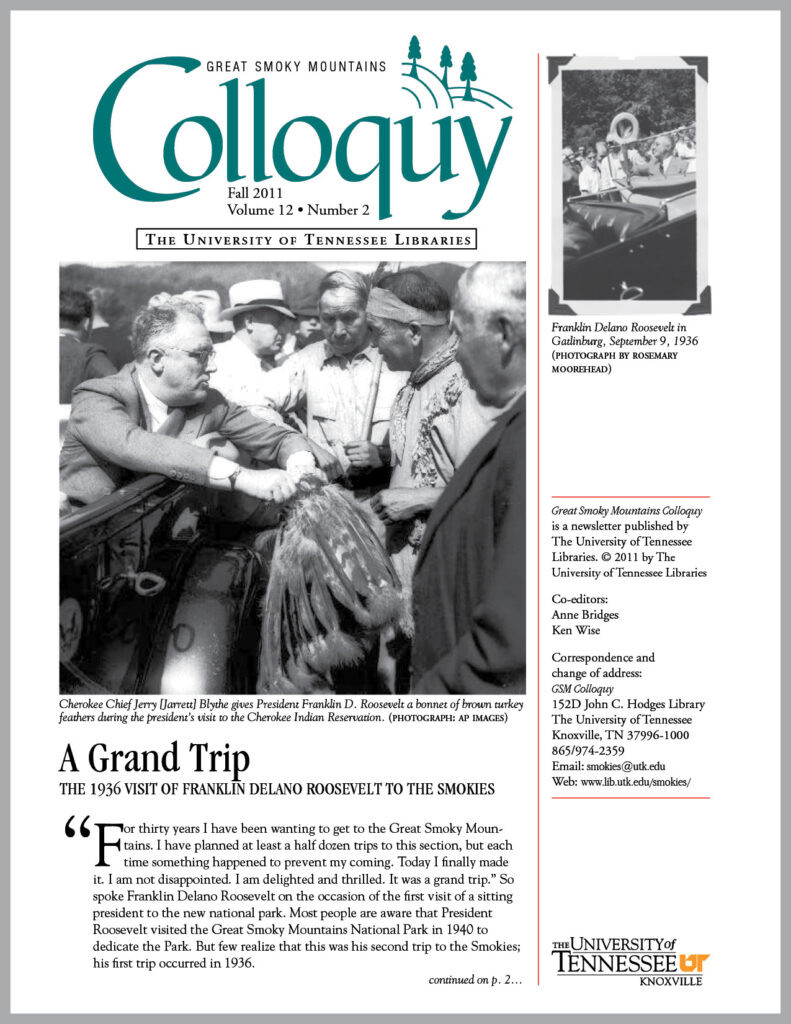
Want to learn more about the Smoky Mountains and about the unique materials collected by the UT Libraries? Revisit issues of the Great Smoky Mountains Colloquy, published between 2000 and 2007 by the UT Libraries’ Great Smoky Mountains Regional Project. The issue pictured here featured President Franklin D. Roosevelt’s tour of the Smokies, Gatlinburg, and Cherokee, North Carolina, in 1936 — several years before his 1940 visit to dedicate the Park.