Governor’s School for the Sciences and Engineering Visits the Library
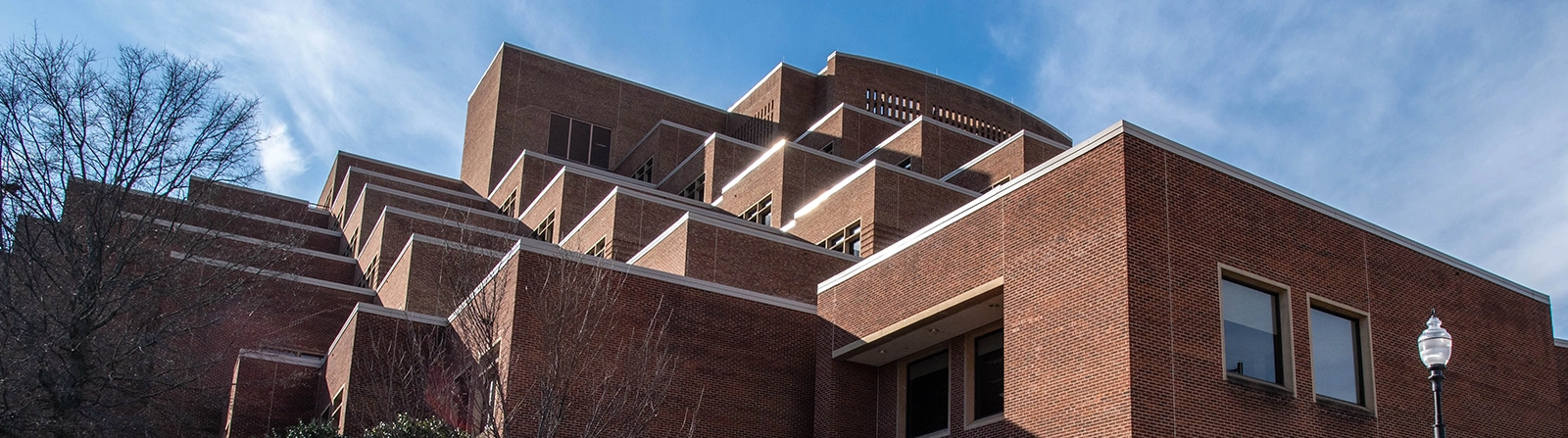
Throughout the month of June, the UT Libraries’ Office of Community Learning and Engagement hosted the Tennessee Governor’s School for the Sciences and Engineering at the John C. Hodges Library. Across four interactive sessions, the Libraries actively connected more than 70 high school juniors and seniors from across the state with high-level academic experiences. Students experienced an in-depth tour of library spaces and insight into research on campus.
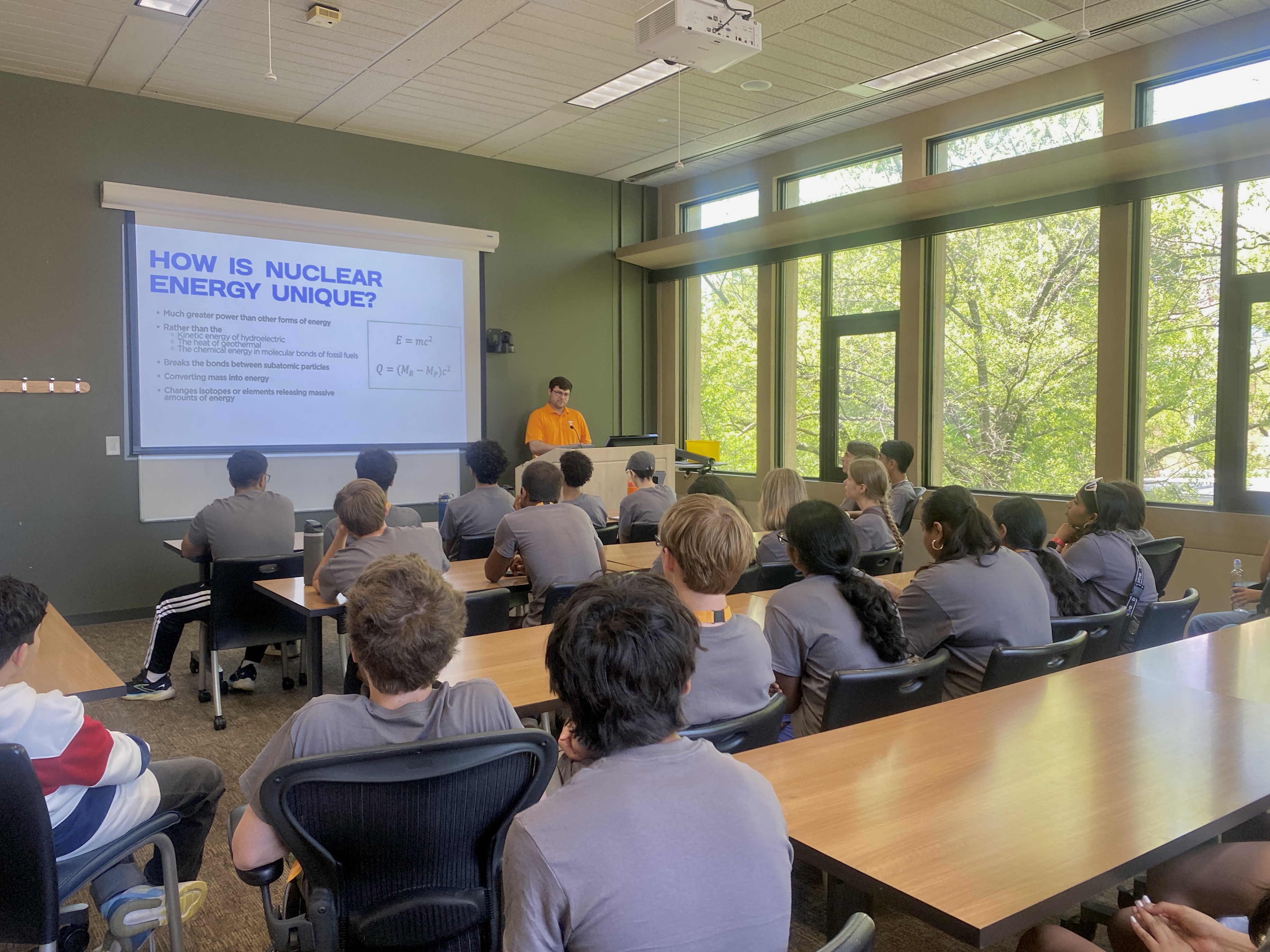
To enrich the students' understanding of research in higher education, the Libraries facilitated a presentation and open discussion with Edan Estes-Lumpkin, a graduate research assistant from the Tickle College of Engineering. Estes-Lumpkin shared his firsthand insights into his academic journey at UT and his work experiences at the Nuclear Regulatory Commission and Oak Ridge National Laboratory. The sessions focused on nuclear engineering, highlighting scientific progress in nuclear energy over the past century and the field’s current contributions to carbon-free electricity in the United States.
The presentation prompted students to explore new concepts and ask thoughtful questions about the following concepts:
- the research process and how to get involved in research
- the structure of a nuclear power plant and how power is generated
- how nuclear energy is unique compared to other forms of energy
- how nuclear waste is handled and the engineering behind safety measures
- the reprocessing of nuclear fuel
- current challenges and benefits of nuclear energy
- how to become a nuclear engineer
The session concluded with a brainstorming activity about potential solutions to the problems faced in nuclear energy, which gave students the opportunity to exercise the core problem-solving skills used in engineering. This was followed by a hands-on activity where students selected an element from the periodic table and calculated its remaining material following radioactive decay. This helped them grasp the unique variety of isotopes and the challenges faced with different kinds. These exercises also introduced simple calculations that are often utilized in professional nuclear engineering work, giving them a feel for the foundational basics of nuclear engineering courses.
Estes-Lumpkin shared that this opportunity to work with the Libraries was: “A positive, enriching experience. I was pleasantly surprised by the students' support for nuclear energy and the number of students who intended to study nuclear engineering.” By providing both the platform and the connection to research, the Libraries' Office of Community Learning and Engagement continues to foster academic curiosity and support student knowledge through meaningful dialogues.
—Angelica Nepomuceno