Faculty Bookplate 2025. On the occasion of Kristin Nicole Haun's promotion to Distinguished Lecturer.
When I teach, I strive to foster a classroom culture grounded in kindness, care, mutual respect and belongingness. I want my students to know they are more than a grade or a number - that I am genuinely invested in their growth and success. In our classroom, I work to create a true sense of belonging, where trust is built through empathy, support, and open communication. My goal is to help students not only succeed academically but also experience the transformative power of a classroom defined by connection, encouragement, and shared commitment to learning.
Faculty Bookplate 2025. On the occasion of Michael K. Ross's tenure and promotion to Associate Professor.
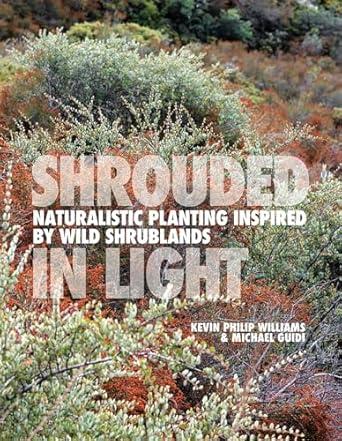
Our ecosystems are amazing sources for inspiration and abstraction for designers. This book contributes to a larger discourse on the role of ecology in planting design, landscape architecture, and horticulture.
Shrouded in Light: Naturalistic Planting Inspired by Wild Shrublands
Faculty Bookplate 2025. On the occasion of Milagros Zingoni's promotion to Professor.
Bruce Mau's Massive Change (2004) is a call for action, arguing that design is no longer just about objects and aesthetics but about shaping the systems that define human life - economics, politics, environments, materials, and social structures. It places design as an agent of change, influencing the future at a planetary scale. The ethos of the book aligns with my scholarship and the value I see in design disciplines. Mau looks at global, systemic transformations on how design can tackle sustainability, urbanization, climate, and technology at macro scales. His advocacy for interdisciplinary design, opens new territories for designers at visionary, almost utopian systems-thinking level. He and I position design as a driver of societal systems, often abstracted at scale, creating a provocation - a call to action for designers to think beyond their discipline.
Faculty Bookplate 2025. On the occasion of Neno Russell's tenure and promotion to Associate Professor.
"I chose J.D. Salinger's The Catcher in the Rye for two deeply personal reasons. I first read it as an angst-ridden gay eighth grader growing up in a small Tennessee town in the 1980s - a time when I didn't yet realize that my thoughts, feelings, and struggles were shared by many other teenagers. This book made me feel less alone. When deciding which book to plate, this choice was obvious because of the profound difference it made in my adolescence - and because of the unusual way I gained access to it. In 1982, the novel sat on my middle school's Restricted Shelf, but since I worked in the library, I was one of the very few students allowed to check it out. In a school of 350 students, I alone was able to experience this life-changing story. That sense of revelation and connection has stayed with me ever since."
Faculty Bookplate 2025. On the occasion of Niki Kirkpatrick Cobb's tenure and promotion to Associate Professor
I chose this book because the in-depth class reading sessions during my final year of middle school sparked a lasting passion for literature and education. That experience not only deepened my appreciation for storytelling but also inspired me to pursue a degree in literature and ultimately a career in higher education as a librarian.
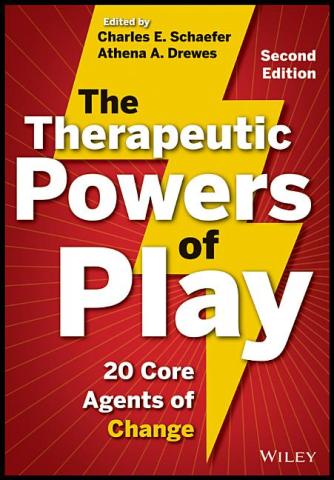
Faculty Bookplate 2025. On the occasion of the promotion of Rachel M. Ross, LCSW, RPT-S, to Clinical Associate Professor.
This play therapy book was selected to support continued growth, creativity, and professional development in working with children and families. This resource offers practical tools, evidence-based techniques, and inspiring insights to enhance your play therapy practice.
The Powers of Play: 20 Core Agents of Therapeutic Change
Author — Charles E. Schaefer (Author), Athena A. Drewes (Author)
Department - Mechanical, Aerospace, and Biomedical Engineering
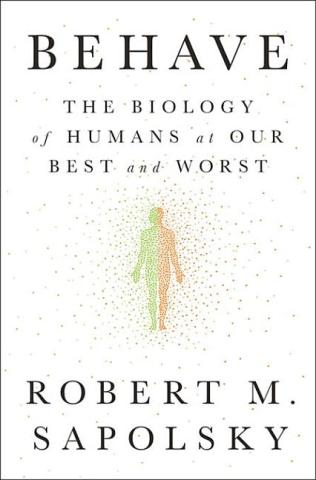
Faculty Bookplate 2025. On the occasion of Reza Abedi's promotion to Professor.
By showing how our behavior is affected by so many factors, some even dating back thousands of years, it works both ways in judging ourselves and others. Knowing that someone's bad behavior is not their fault, we tend to forgive them, at least passing the initial reactionary phase. It also makes us twice to give too much credit to someone for their achievements.
Behave: The Biology of Humans at Our Best and Worst