Digital Production
About
Digital Production digitizes materials from Special Collections and Archives, general library holdings, and other small projects from campus departments.
The Digital Production lab utilities a variety of scanners and cameras to scan flat, bound, and oversized materials. These capture devices include Fujitsu auto-document feeder scanners, Epson flatbeds, 50MP Fujifilm medium format cameras, and a 100MP Phase One iXG medium format camera.
Material types we scan in-house:
- Bound manuscripts and documents
- Unbound manuscripts and documents
- Print photographs, including ambrotypes, daguerreotypes, and tintypes
- Photographic negatives, slides, and other transparencies
- Oversize maps, drawings, blueprints, newspapers, etc
- Material over 30x40 inches may require image stitching
- Flat artwork
Materials we outsource to vendors for digitization include audio, video, motion picture film, microfilm/microfiche, 3D, infrared, and other specialized scanning.
We have included some of our workflow procedures, guidelines, and the equipment we use for digitization on this page.
Contact askdi@utk.edu for digitization requests, consultations, or inquiries about our processes.
Scanning equipment
A digitization project's needs will determine which capture device the lab uses. Duplicate, textual works are usually scanned on an ADF scanner, such as theses and dissertations, whereas single copy archival materials are captured using medium format camera systems.
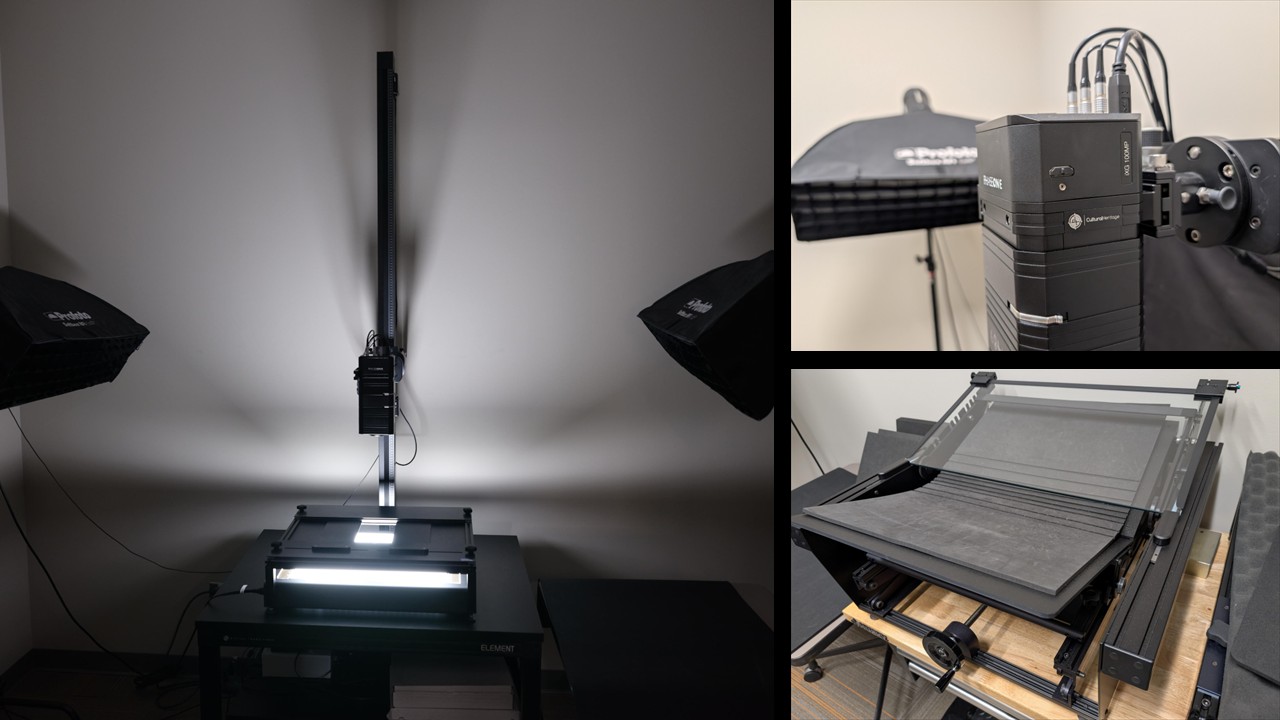
Phase One camera system
Camera system captures reflective and transmissive items: print photographs, negatives, slides, oversize, and books.
- Phase One iXG 100MP digital back, medium format camera
- Digital Transitions Element copy stand with automatic column for moving camera to meet PPI resolution needed
- Digital Transitions film scanning kit with Kaiser light table, a 120mm lens (medium and large tranmissives), and a 21mm lens extension tube (for capturing tranmissives as small as 35mm)
- Digital Transitions book cradle with anti-reflective glass
- Profoto D2 flash photography lights with softbox kit
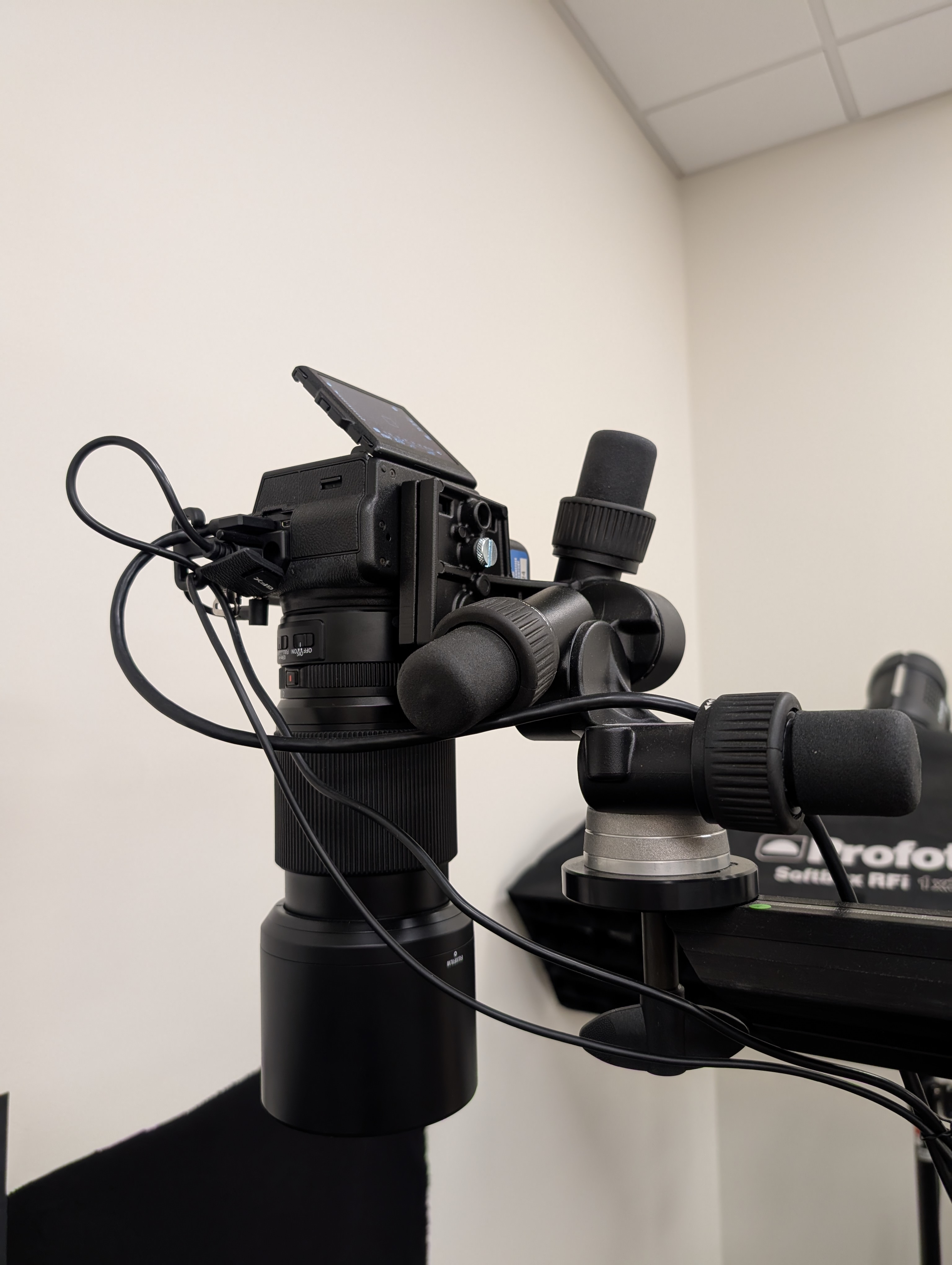
Fujifilm GFX 50S medium format camera system
Camera system captures print photographs, bound, unbound, and oversized (maps, blueprints, etc) material.
- Fujifilm GFX 50S medium format camera with 50 megapixel sensor
- Fujifilm 120mm f/4 Macro (print photographs, bound, and unbound material)
- Fujifilm 45mm lens extension
- Fujifilm 32-64mm f/4 zoom lens (oversized material)
- Profoto D2 flash photography lights with softbox kit
- Foba DSS-Gamma Camera Stand 7.9ft
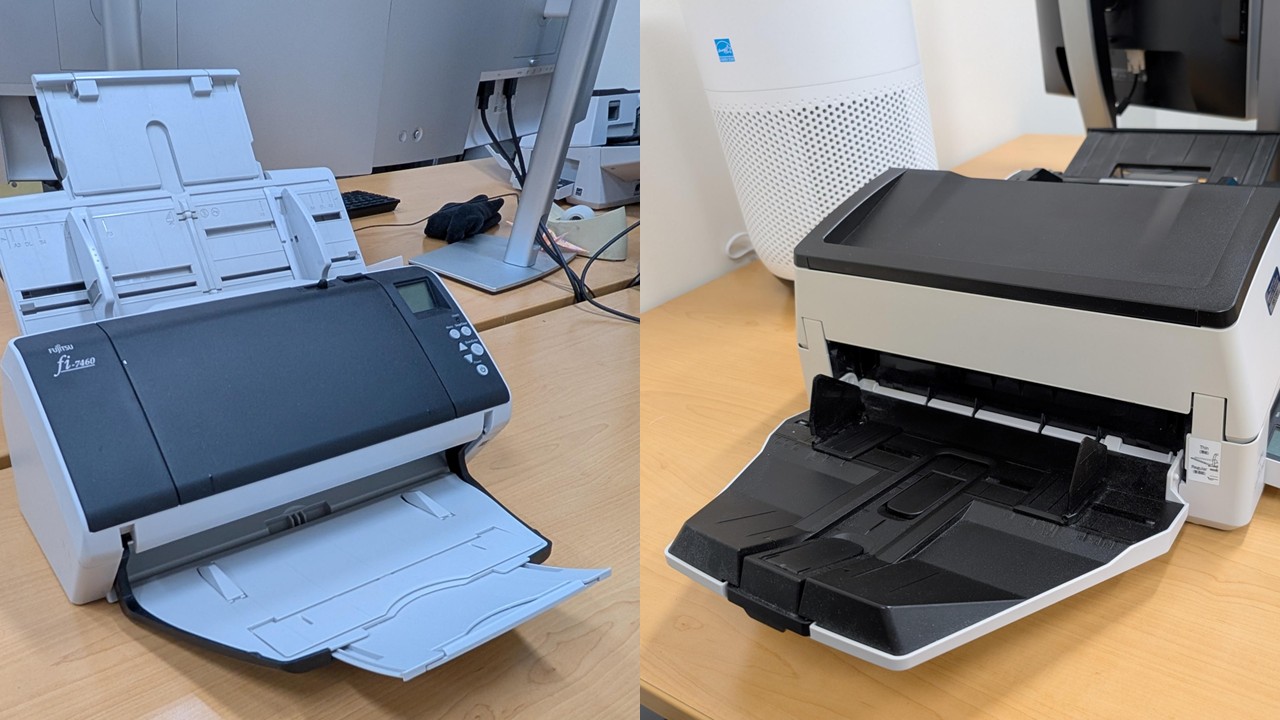
ADF scanner(s)
The Digital Production lab uses auto-document feeder scanners for scanning duplicate text-based material. The lab does not scan single copy items on these scanners.
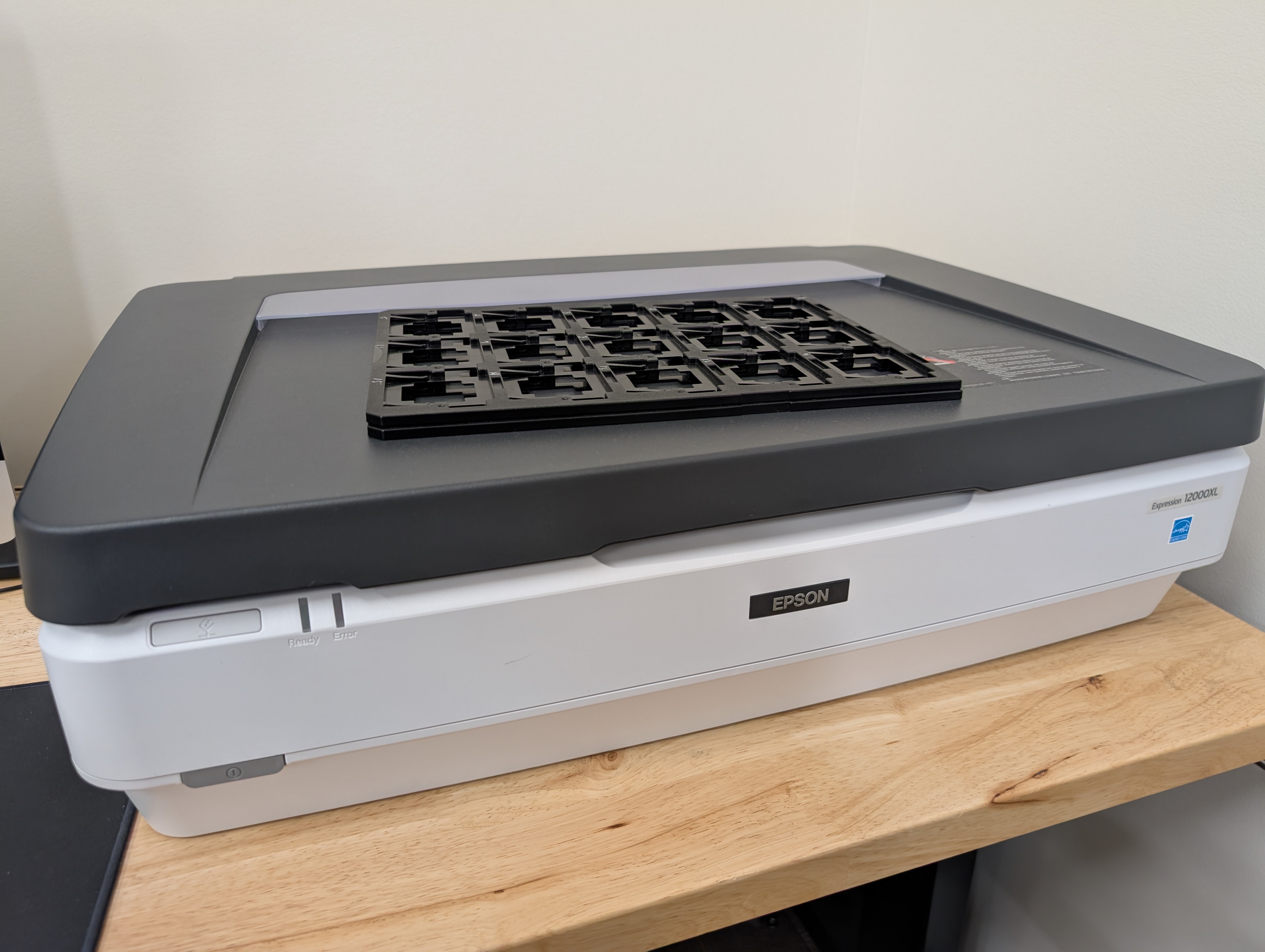
Flatbed scanner(s)
The Epson 12000XL flatbed scanners are used to capture reflective and transmissive material that might be difficult to capture on a camera system, such as photos and negatives that are curled.
- Acid free paper
- Air blowers - clearing away dust from the camera lens and capture surface
- Anti-reflective glass - to flatten non-delicate material under a camera
- Anti-static brushes - cleaning slides or negatives
- Gaffer and painters tape
- Golden Thread color targets - to calibrate camera systems and include in preservation level captures
- Guillotine - chopping books, such as theses and dissertations to prepare them for scanning on an ADF scanner
- Kimtech wipes - delicate cleaning, such as flatbed glass or copy stand surface
- Label maker
- Microfiber cloths - wiping down surfaces
- Pencils, notepads, rulers, and sticky notes
- Rust proof paperclips and plastic clips
- Staple remover
- Teflon spatulas - used to help lift delicate material off the capture surface or hold down a portion of a page or photograph to reduce shadows
- X-Acto knives - removing covers from books
- X-Rite i1Photo Pro 2 Color Management Kit - adding industry standard color profiles to monitors